
When we talk about natural finishes for musical instruments (especially within the family of bowed instruments), shellac holds a place of honor. Not only for its beauty but also for its extraordinary physical and “mechanical” qualities. But where does this precious resin come from? The answer takes us far away, to the forests of India and Southeast Asia, where a small insect lives: Kerria lacca.
What is Kerria lacca?
Kerria lacca (formerly known as Laccifer lacca) is a parasitic insect that feeds on the sap of certain tropical plants. During its life cycle, it secretes a protective resin that coats the branches of the host tree. This resin, collected and purified, becomes shellac. The raw product is called sticklac and is a mixture of resin, plant fragments, and insect residues. After various refining processes (washing, filtering, and drying), shellac flakes are obtained, ready to be dissolved in alcohol and used as a varnish.
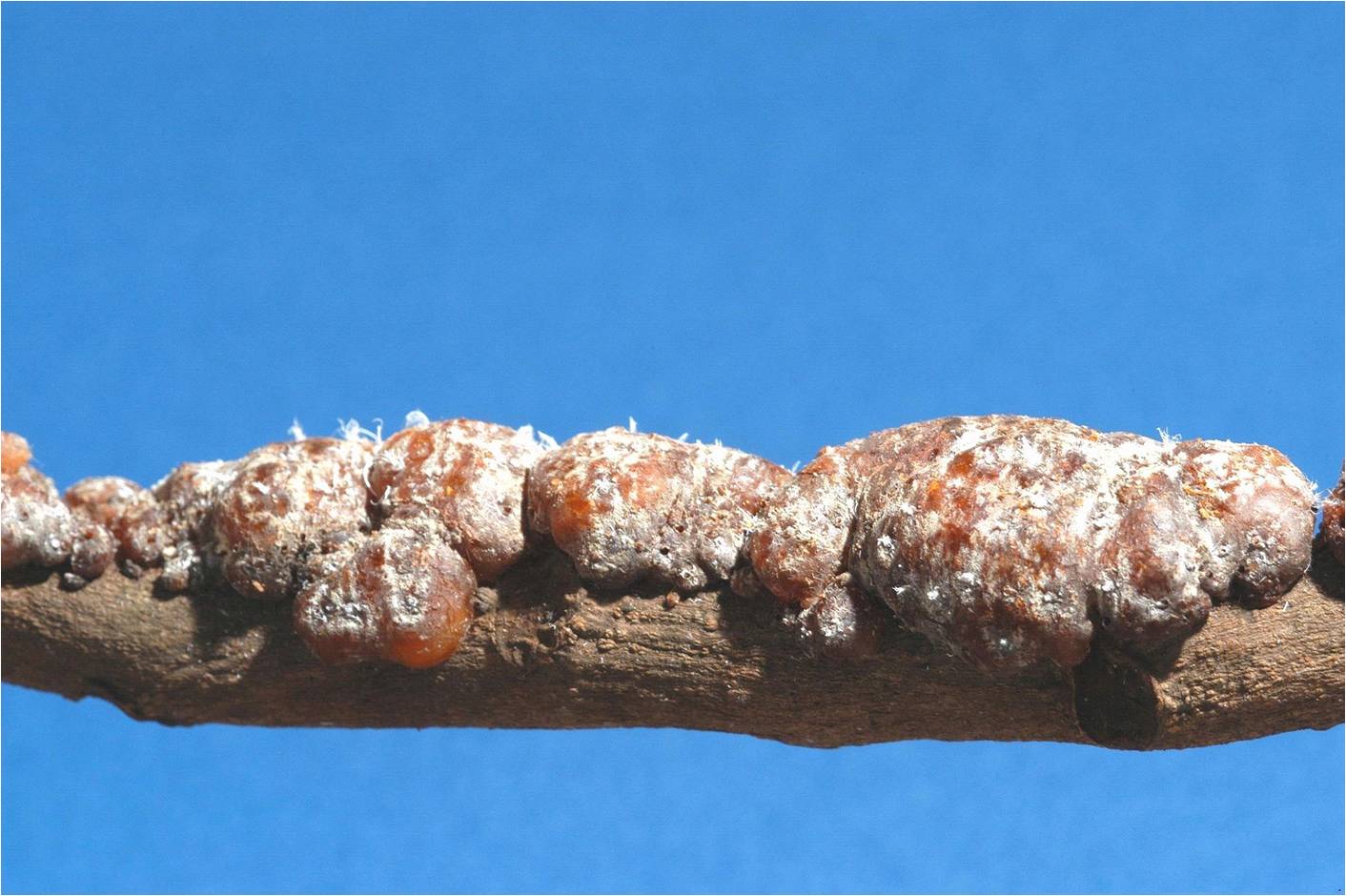
Shellac in Luthiery
In luthiery, shellac is widely used for finishing bowed and plucked instruments. It has several unique characteristics:
- Aesthetic finish: It gives warmth, depth, and brilliance to the wood, enhancing its grain, figuring, and chatoyancy.
- Acoustic qualities: The thin film formed by shellac varnish does not really hinder the vibration of the instrument; Indeed, it softens the sound, making it warmer and richer.
- Reversibility: Unlike synthetic finishes, it can be removed and retouched with relative ease.
- Non-toxicity: It is an absolutely harmless substance and therefore poses no health risk. Even the solvent commonly used to dissolve it (ethyl alcohol) is one of the “healthiest” used in the world of varnishes.

A Natural Choice
In an era dominated by synthetic materials, this ancient resin reminds us that quality often comes from what nature itself offers us. Shellac stands in contrast to oil varnish, which is also widely used in luthiery.


Leave a Reply